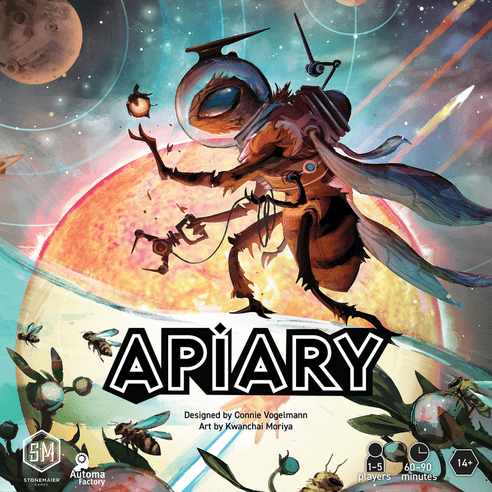
Ah, Apiary. Stonemaier Games' attempt to make us care about space bees. Because regular terrestrial agriculture simply wasn't producing enough plastic components for the modern gamer, I suppose. The central premise involves assigning hexagonal workers around a board until they get too old and literally have to hibernate. Let's cast aside the thematic dressing for a moment and talk about what actually matters: just how much does this box weigh, and what kind of visual footprint are we dealing with?
The component weight here is passable, though only barely. The plastic space bees have a satisfactory tactile clink to them, and the resource tokens won't scatter if someone coughs, but I’ve encountered thicker cardboard in budget cereal boxes than what we see on some of these player mats. And don't even get me started on the custom insert. It’s functional, assuming your definition of "box organization" is a chaotic arrangement of plastic bags crammed into molded trays that grudgingly accommodate sleeved cards. A proper insert shouldn't mandate an advanced degree in spatial geometry just to ensure the lid closes completely flush.
The primary worker bumping mechanic is neat enough—if you actually enjoy constantly adjusting the physical orientation of your pieces to keep track of their numerical strength. You place a bee, you bump a bee, the bee grows stronger. Eventually, the bee reaches strength four and hibernates, which is mechanically sound but traps you in a repetitive loop of physical piece retrieval and redeployment. The 20 asymmetric factions introduce variable player powers, effectively guaranteeing that at least one person at the table will complain about severe imbalances after losing.
The Verdict
Pros:
- The hexagonal tiles fit securely together, satisfying the bare minimum structural requirements of a tile-placement game.
- The varying worker strength indicators are generally legible under adequate overhead lighting, somewhat reducing the need for constant squinting.
- The box is reasonably dense, providing a passable illusion of physical value when carried from the shelf.
Cons:
- Space bees. Really? The theme feels like it was applied with low-grade adhesive.
- The continuous manual manipulation of worker strength faces guarantees frequent tumbling and endless re-evaluation of your own tactile dexterity.
- Stowing the faction tiles back into the box feels like a stressful structural integrity test of the insert itself.
Final Verdict: Borrow a friend's copy. Unless you absolutely love playing with space bees, the physical footprint and fiddly worker components make it slightly too cumbersome to outright purchase without trying it first.