 It’s not just about controlling the spice, it’s about sending a terrifying message.
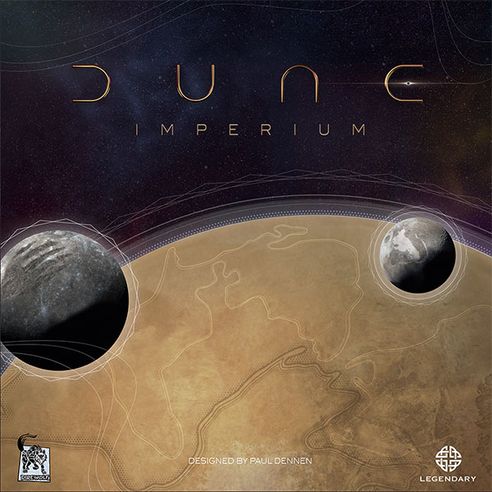
Dune: Imperium. The undisputed, original masterpiece that somehow managed to blend the agonizing tension of worker placement and the logistical nightmare of deck-building completely seamlessly. Long before the Uprising sequel came along with its colossal, board-crushing sandworms, this original box is exactly where we first learned the true, miserable meaning of betraying your closest friend over a single, pathetic drop of water.
You deploy agents to Arrakis, you practically beg on your knees for the Emperor for political favors, and you desperately cobble together a deck capable of holding a single combat zone. It is elegant. It is incredibly tense. And it captures the sheer, unbridled anxiety of Frank Herbert's universe better than almost anything else. You don't build a reliable engine here; you build a highly precarious house of cards on the edge of a cliff and pray the Harkonnens don't sneeze on it. Every single round is a terrifying mathematical equation where you realize you are exactly one resource short of deploying a dreadnought, meaning you have to send your last worker to a miserable spice blow just to afford a seat at the High Council.
And then there is the conflict phase. It’s arguably the most devious bit of modern game design in the last decade. You commit troops, but your opponents have no idea what secrets are lurking in your hand. The Intrigue cards! An absolutely vicious injection of pure, unfiltered paranoia. You might think you've secured a crushing victory, having committed ten troops to the basin, only for the player to your left to slowly flip over a card that completely obliterates your forces and steals the victory point right out of your trembling hands. It is magnificent. It will ruin your evening in the best possible way.
Family Session vs. Hardcore Gamers
Is it a family game? Well, a family of Machiavellian despots would absolutely adore it. If your family regularly communicates via cryptic threats and enjoys political maneuvering over the breakfast table, it's perfect! Otherwise, keep it stashed securely away for the hardcore gaming crew. The deeply subtle intricacies of deck-thinning and the brutal cutthroat combat will be completely lost on your nan. But your gaming friends? They will adore the razor-sharp tension of the final round where everything hangs on a single card draw.
Pros:
- A genuinely masterful fusion of two beloved mechanics (worker placement & deck building).
- The Intrigue cards provide monumental, table-flipping twist moments.
- Scales wonderfully at three or four players, keeping everyone constantly on edge.
Cons:
- Visually, the board is a bit beige. Intensely, aggressively beige.
- It is so remarkably tight that a single mistake on turn two can ruin you forever.
- You absolutely need the app or a clunky dummy player for a two-player game.
Final Verdict: Borrow a friend's copy. Let's be brutally honest for a moment: you are probably already buying the Uprising sequel because it has giant worms in it, but returning to the incredibly tight, mathematically precise mechanics of the original is always an absolute treat.