 You are a fantasy race trying to forcefully alter the physical landscape purely to spite your neighbors.
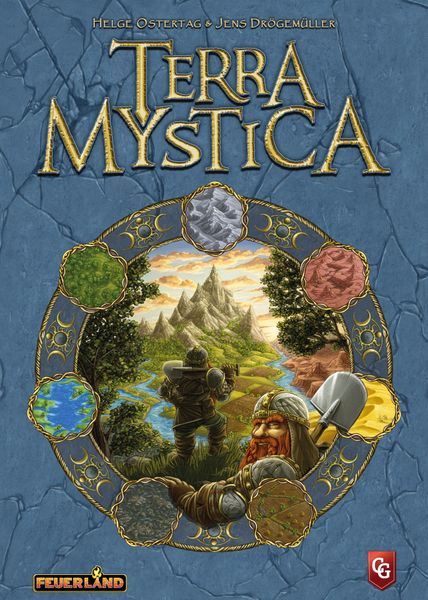
Terra Mystica. To the uninitiated, it looks like someone took the concept of Catan, dipped it in a vat of aggressively beige fantasy artwork, and then mathematically engineered it to be as joylessly rigid as a tax audit. But that is exactly where the genius lies! This is an absolute thoroughbred Euro-game without a single drop of luck. There are absolutely no dice. No secret cards. No randomized events. You begin the game with all the information laid bare, meaning if you inevitably bankrupt your civilization on turn three by carelessly building a wooden bridge over a swamp, the only person you can physically blame is yourself. It is deeply humbling.
You pick one of fourteen incredibly asymmetrical fantasy races—perhaps you are the Swarmlings, capable of aggressively expanding across the board like a plague, or perhaps the Dwarves, who fundamentally refuse to use boats and just dig entirely underneath everyone else. Your primary objective? Shoveling dirt. Quite literally. You must painfully terraform the terrain into your favored color before you can build a house on it. The sheer unadulterated tension of watching an opponent slowly inch their way towards a crucial mountain tile that you desperately need to expand your city is agonizing. And because of the genius ‘power bowl’ mechanic, you actually want people to build right next to you! The closer they build, the more magical power the proximity generates for you, trapping you in a perpetually uncomfortable symbiotic embrace with an opponent you are actively trying to destroy economically.
Family Session vs. Hardcore Gamers
Could you bring this out with the family? Absolutely not. Unless your family actively enjoys completely deterministic, no-luck resource puzzles that heavily punish early mistakes, you will be met with absolute silence. The sheer number of wooden bits, diverse factions, and complex action management make it impenetrable for casual play. This specifically belongs on a Sunday afternoon with four hardcore gamers who treat board game night as a silent, intensely competitive, brain-burning marathon.
Pros:
- Complete, unadulterated determinism. There is no luck to blame for your inevitable failure.
- Every single one of the 14 factions feels and plays completely differently.
- The power-bowl energy management system is an absolute interactive masterstroke.
Cons:
- The learning curve is practically a sheer vertical cliff face for new players.
- A poor decision on turn one can mathematically lock you out of winning for two hours.
- The artwork and theme feel remarkably dry for a game featuring witches and giants.
Final Verdict: Buy it yourself. It defined the modern heavy-euro genre for an entire decade. It is a mathematical masterpiece wrapped in a slightly beige fantasy theme that demands, and perfectly rewards, absolute strategic focus.